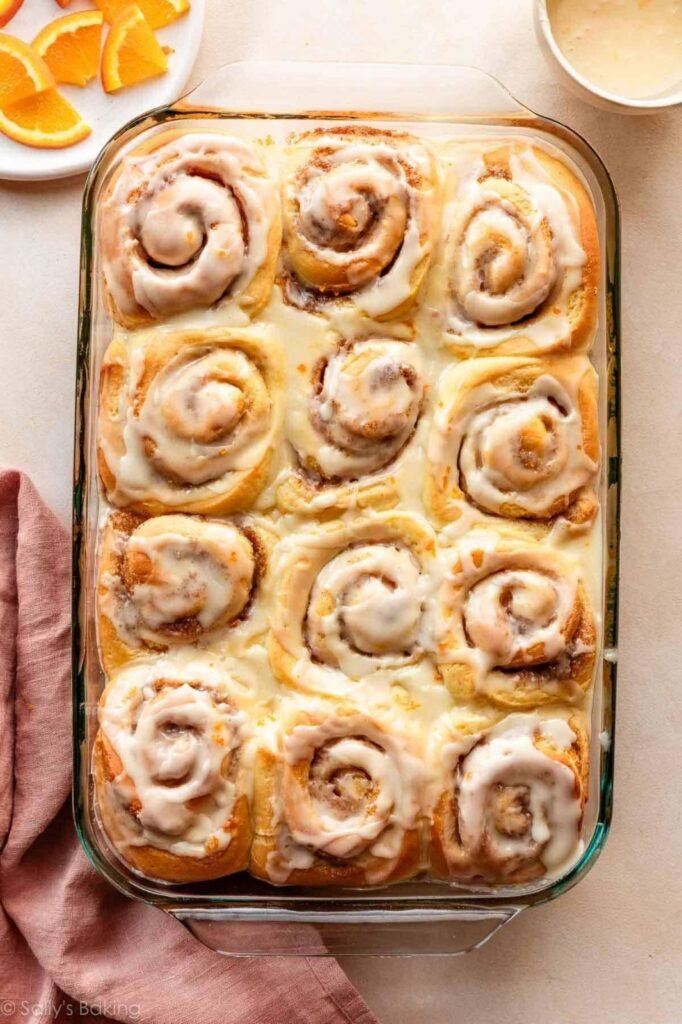
The first time I made sourdough orange cinnamon rolls, I honestly expected them to taste like regular cinnamon rolls with a hint of orange. Instead, my kitchen smelled like a bakery crossed with a citrus grove, and the rolls disappeared before they had fully cooled.
I’ve been baking sourdough for a few years now, and cinnamon rolls are one of those recipes that always impress people more than they should. The overnight fermentation does most of the work while you sleep, and the dough turns out soft, fluffy, and rich without feeling heavy. Adding orange zest and juice takes the whole thing somewhere special.
If you already love sourdough cinnamon rolls, these are worth trying at least once. But fair warning: once you do, plain cinnamon rolls may start feeling a little boring.
Why orange works so well with cinnamon
I used to think orange in baked goods could easily turn into “orange-scented disappointment.” You know the kind — barely any citrus flavor, just sweetness. The trick here is using both fresh zest and fresh juice in multiple parts of the recipe:
- The dough gets orange zest for a subtle citrus base.
- The filling gets more zest mixed with cinnamon and brown sugar.
- The glaze uses fresh orange juice, which brightens everything up at the end.
The result is balanced. The cinnamon still leads, but the orange keeps the rolls from tasting too heavy or overly sweet.
What I love most about this recipe
- Overnight dough = easy morningsI mix the dough in the evening, let it ferment overnight, and finish the rolls in the morning. It feels like cheating in the best way.
- The texture is incredibleThese rolls stay soft for hours, and the sourdough gives them a gentle depth of flavor you don’t get from quick yeast rolls.
- They feel special without being complicatedThis is the kind of breakfast people assume took all day. It didn’t. Most of the time is just waiting.
Ingredients you’ll need
Here’s the short version of the lineup:
For the rolls
- 1/2 cup active sourdough starter
- 1/4 cup water
- 1/4 cup fresh orange juice
- 4 cups all-purpose flour
- 1/2 cup neutral oil (or melted butter)
- 1/2 cup honey
- 2 eggs
- 1/2 tablespoon orange zest
- 1 teaspoon baking soda
- 2 teaspoons baking powder
- 1/2 teaspoon salt
For the filling
- 1/2 cup softened butter
- 3/4 cup brown sugar
- 1 tablespoon cinnamon
- 1 tablespoon orange zest
For the glaze
- 1 cup powdered sugar
- 1–2 tablespoons fresh orange juice
Use real oranges here. Bottled juice works in a pinch, but fresh zest is what gives these rolls their personality.
The one tool that makes life easier
A microplane or citrus zester is absolutely worth having for this recipe. I used a regular grater the first time and ended up with chunky pieces of peel in the dough. Not ideal.
If you don’t have a zester, use a paring knife to remove the orange peel (avoid the white pith), then mince it finely.
How I make sourdough orange cinnamon rolls
Step 1: Mix the dough (night before)
In a stand mixer bowl, combine:
- active sourdough starter
- water
- orange juice
- flour
- oil or melted butter
- honey
- eggs
- orange zest
Mix on low until the dough comes together, then knead for 6–8 minutes until smooth and stretchy. You’re looking for a soft dough that passes the windowpane test (you can stretch a small piece thin enough to see light through it).

Step 2: Let it ferment overnight
Transfer the dough to a lightly oiled bowl, cover it tightly, and leave it at room temperature overnight. In my kitchen, about 10–12 hours works well.
A warmer room gives a better rise. In winter, I sometimes put the bowl in the oven with just the light on.
Step 3: Add the final leavening
The next morning, mix in:
- 1 teaspoon baking soda
- 2 teaspoons baking powder
- 1/2 teaspoon salt
Knead for about 5 minutes until everything is evenly incorporated. This extra lift helps the rolls bake up beautifully soft.
Step 4: Roll out the dough
Preheat your oven to 375°F (190°C).
On a lightly floured surface, roll the dough into a rectangle about 12 x 14 inches and roughly 1/4 inch thick.

Step 5: Make the orange-cinnamon filling
Mix together:
- softened butter
- brown sugar
- cinnamon
- orange zest
Spread it evenly over the dough, going almost to the edges.
This is where the magic starts. The smell alone is enough to make people wander into the kitchen asking, “What are you making?”
Step 6: Roll and slice
Roll the dough up tightly from the long edge into a log. Pinch the seam closed.
Slice into 12 rolls using:
- a sharp knife
- a bench scraper
- or unflavored dental floss (surprisingly effective)
Place the rolls in a greased baking dish or one lined with parchment paper.

Step 7: Bake
Bake for 20–25 minutes, until the tops are golden brown and the center rolls look set.
Don’t overbake them. I learned that the hard way once while answering a phone call mid-bake. Dry cinnamon rolls are a heartbreak no glaze can fully fix.
Step 8: Glaze and serve
Whisk powdered sugar with orange juice until smooth. Start with 1 tablespoon juice and add more as needed.
Let the rolls cool for about 10 minutes, then drizzle the glaze over the top.
Serve warm with coffee. Or tea. Or honestly just stand at the counter and eat one immediately — I won’t judge.
A few practical tips from trial and error
1. If the dough feels too soft, chill it briefly
Sometimes enriched sourdough dough can get a little sticky after rolling. Pop the rolled log into the freezer for 10–15 minutes before slicing. It makes clean cuts much easier.
2. Don’t overdo the flour when rolling
A lightly floured surface is enough. Too much flour can make the rolls dense. I often use a bench scraper to lift the dough instead of adding more flour.
3. Roll tightly for better swirls
A loose roll means gaps inside the cinnamon swirl. A snug roll gives those beautiful bakery-style layers.
4. Fresh zest matters more than you think
I’ve tested this with older oranges that had dried-out peels, and the flavor was noticeably weaker. Fresh, fragrant oranges make a big difference.
My favorite baking timeline
This schedule fits nicely into real life, which is probably why I keep making it.
Day 1
- Noon: Feed sourdough starter.
- 7:00 p.m.: Mix and knead the dough. Cover and leave overnight.
Day 2
- 7:00 a.m.: Add baking soda, baking powder, and salt. Roll, fill, and shape the rolls.
- 7:30 a.m.: Bake for 20–25 minutes. Glaze and serve warm.
It’s the kind of breakfast that makes an ordinary Saturday feel a little festive.
Common mistakes to avoid
Using an inactive starter
Your starter should be recently fed, bubbly, and active. A sleepy starter leads to dense rolls.
Adding too much flour during kneading
This dough is supposed to be soft. Resist the urge to keep adding flour unless it’s truly unmanageable.
Overbaking
Start checking at 20 minutes. The rolls should be golden, not dark brown.
Skipping the orange zest in the filling
The dough alone won’t give enough citrus flavor. The filling is where the orange really shines.
Can you make them ahead?
Yes — and I often do.
You can assemble the rolls, place them in the baking dish, cover tightly, and refrigerate overnight. The next morning, let them sit at room temperature for 30–45 minutes while the oven preheats, then bake as directed.
That’s especially handy for holidays when you want fresh cinnamon rolls without morning chaos.
Nutrition snapshot (per roll)
- Calories: ~452 kcal
- Carbohydrates: 70g
- Protein: 6g
- Fat: 18g
- Sugar: 35g
They’re definitely a treat, but a very worthwhile one.
Final thoughts
Sourdough orange cinnamon rolls have become one of those recipes I bring out when I want the house to feel cozy and alive. The overnight dough keeps things easy, the orange brightens the classic cinnamon roll flavor, and the whole process feels more rewarding than difficult.
If you’re already baking sourdough regularly, this is a fun variation that feels genuinely different — not just a small tweak to the same recipe. And if you’re newer to sourdough, don’t be intimidated. The dough is forgiving, and the overnight schedule actually makes it easier to manage.
Just don’t expect leftovers to last long. In my house, they never do.