The first time I tried making sourdough blueberry croissants at home, I honestly thought I had taken on more than I could handle. Between the sourdough starter, the butter layers, and the blueberry filling, it seemed like one of those bakery-style recipes that only professionals could pull off.
I was wrong.
After a few attempts, a couple of mistakes, and more butter-covered countertops than I’d like to admit, I finally found a method that consistently produces flaky, buttery layers filled with sweet blueberry goodness. The result is somewhere between a croissant and a muffin—often called a cruffin—and it’s one of the most rewarding things I’ve baked with sourdough.
If you enjoy baking bread and want to try something a little more special than a standard loaf, this recipe is a great place to start.
Why I Love This Recipe
Most sourdough recipes focus on bread, but there is something incredibly satisfying about turning a simple sourdough starter into delicate pastry layers.
The sourdough adds a subtle tang that balances the sweetness of the blueberries. The butter creates those beautiful flaky layers that pull apart when you take a bite. And unlike some complicated pastry recipes, this one can be made in a regular home kitchen without any special equipment.
The best part?
When these come out of the oven, the entire kitchen smells like a bakery.
Ingredients
Dough
- 500g bread flour
- 100g active sourdough starter
- 250ml warm milk
- 50g sugar
- 1 egg
- 8g salt
- 60g soft butter
Butter Layer
- 200g cold butter
Blueberry Filling
- 1 cup blueberries
- 3 tablespoons sugar
- 1 tablespoon lemon juice
- 1 teaspoon cornstarch
Topping
- Powdered sugar for dusting
Before You Start
One lesson I learned early is that temperature matters more than anything else.
If the butter gets too warm, the layers disappear. If the dough becomes too soft, rolling becomes frustrating. Keeping everything cool is the secret to achieving that bakery-style flakiness.
I usually clear some space in the refrigerator before starting because the dough needs several chilling periods throughout the process.
Step 1: Prepare the Dough
In a large mixing bowl, combine:
- Active sourdough starter
- Warm milk
- Sugar
- Egg
Mix until everything is combined.
Add the bread flour and salt. Stir until a rough dough forms.
Once the dough comes together, add the softened butter and knead until smooth and elastic. This usually takes around 8 to 10 minutes by hand.
The dough should feel soft but not sticky.
Cover the bowl and let it rest until slightly puffy. Depending on room temperature and starter strength, this may take a few hours.
After the initial rise, place the dough in the refrigerator for at least one hour.
Cold dough is much easier to laminate.
Step 2: Make the Blueberry Filling
While the dough chills, prepare the filling.
Add the blueberries, sugar, lemon juice, and cornstarch to a small saucepan.
Cook over medium heat while stirring frequently.
After several minutes, the berries begin breaking down and the mixture thickens into a jam-like consistency.
Remove from heat and allow it to cool completely.
One mistake I made during my first attempt was using warm filling. The heat softened the butter layers and made shaping difficult.
Now I always cool the filling before using it.
Step 3: Laminate the Dough
This is where the magic happens.
Roll the chilled dough into a large rectangle.
Place the cold butter in the center.
Fold one side over the butter, then fold the other side on top, similar to folding a letter.
Roll the dough out carefully.
Fold again.
Place the dough back in the refrigerator for 20 minutes.
Repeat this rolling and folding process three times total.
These repeated folds create the thin layers that make croissants so flaky.
If the dough ever becomes difficult to handle or the butter feels soft, stop and chill it.
Patience here pays off later.
What Lamination Actually Does
Many home bakers wonder why all these folds are necessary.
Each fold creates alternating layers of dough and butter.
During baking, moisture from the butter turns into steam.
That steam separates the layers, creating the light, airy texture that makes croissants so special.
Without proper lamination, you end up with sweet bread rather than flaky pastry.
Step 4: Shape the Cruffins
Once the final fold is complete and the dough is well chilled, roll it into a thin rectangle.
Spread a light layer of blueberry filling across the surface.
Try not to overload the dough.
Too much filling can squeeze out during shaping and make the layers stick together.
Using a sharp knife or pizza cutter, cut the dough into long strips.
Roll each strip into a spiral shape.
The spirals naturally create beautiful layers that expand as they bake.
Place each spiral into a greased muffin tin.
At this stage they may look small, but they grow significantly during proofing and baking.
Step 5: Final Proof
Cover the muffin tray loosely.
Allow the shaped cruffins to rise for approximately 2 to 3 hours.
The exact time depends on your room temperature and the strength of your sourdough starter.
You’re looking for dough that appears noticeably puffier and lighter.
Avoid rushing this step.
Under-proofed pastries often bake up dense and heavy.
Step 6: Bake
Preheat the oven to:
200°C (390°F)
Bake for 20 to 25 minutes.
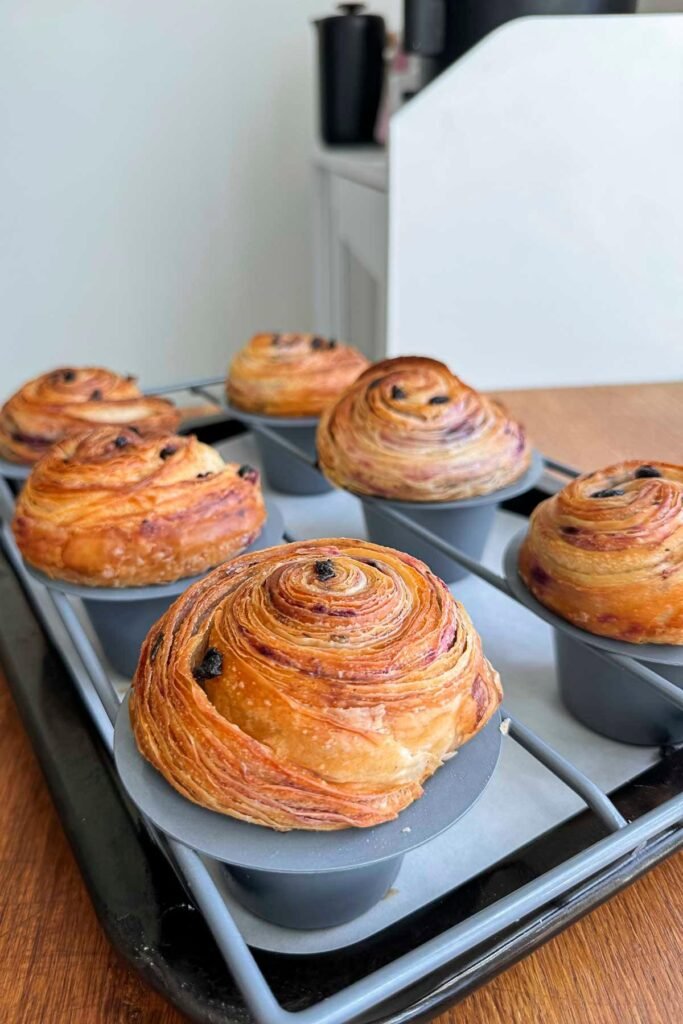
The tops should become beautifully golden brown with visible flaky layers.
One of my favorite moments is watching the layers expand during the final few minutes of baking.
The aroma of butter, blueberries, and freshly baked dough filling the kitchen is worth the effort alone.
Step 7: Finish and Serve
Allow the cruffins to cool for several minutes.
Dust generously with powdered sugar.
Serve while still slightly warm.
The contrast between the crisp outer layers and the soft blueberry-filled center is absolutely delicious.
These are excellent with:
- Coffee
- Tea
- Hot chocolate
- Fresh fruit
- Weekend brunch spreads
Common Mistakes to Avoid
Using Warm Butter
The butter layer must remain cold.
Soft butter will blend into the dough instead of creating distinct layers.
Overfilling with Blueberries
It’s tempting to add extra filling, but too much can leak out and make rolling difficult.
Skipping Chill Time
Every chilling period serves a purpose.
Cold dough is easier to work with and produces better layers.
Weak Sourdough Starter
An inactive starter results in poor rise and dense pastries.
Always use a bubbly, active starter.
Rushing the Final Proof
Proper proofing improves texture and flavor.
Give the dough enough time to become puffy before baking.
Helpful Baking Tips
After making this recipe several times, a few habits consistently improve the results.
- Use bread flour for better structure.
- Keep a ruler nearby if you want evenly sized pastries.
- Chill the dough whenever it feels soft.
- Use a metal muffin tray for better browning.
- Let the filling cool completely before spreading.
- Handle the dough gently during shaping.
Small details make a big difference when working with laminated dough.
Are These Croissants or Cruffins?
Technically, because they’re baked in a muffin tin and shaped into spirals, they’re closer to cruffins.
However, the laminated dough and flaky layers are inspired by traditional croissants.
Whatever you choose to call them, they’re incredibly delicious.
Most people simply call them “blueberry sourdough croissants” because that’s the flavor and texture they resemble.
Storing Leftovers
If you somehow have leftovers, store them in an airtight container at room temperature for up to two days.
For longer storage, freeze them.
To reheat, place them in a warm oven for a few minutes.
This helps restore some of the crispness in the outer layers.
I actually enjoy reheating them the next morning with a cup of coffee. The blueberry flavor becomes even more noticeable after resting overnight.
Final Thoughts
Making homemade sourdough blueberry croissants might seem intimidating at first, but once you understand the basic process, it becomes surprisingly manageable.
The combination of tangy sourdough, buttery layers, and sweet blueberry filling creates something that feels special enough for a bakery display case yet comforting enough for a weekend breakfast at home.
The first batch may not be perfect. Mine certainly wasn’t. But every attempt teaches you something new about dough, butter, and patience.
And when you finally pull a tray of golden, flaky blueberry cruffins from the oven, you’ll understand why so many home bakers become completely obsessed with laminated sourdough pastries.